When you pick up a product from your grocery cart, do you ever pause to read the label carefully? In the UAE, food labels are more than just fine print — they are your first line of defense for safe, informed, and halal-conscious shopping. With hundreds of products from different countries available online and in stores, knowing how to read and understand food labels helps you make smarter, healthier choices every time.
At Grubss, we’re passionate about helping UAE families shop confidently. Whether you’re looking for baby food, snacks, or household essentials, understanding what’s written on the packaging ensures that every product aligns with your family’s values, health needs, and taste preferences. Let’s explore how to decode food labels — from expiry dates to halal marks and nutrition facts — so you can shop with full confidence.
Expiry Dates: Understanding Shelf Life in UAE Groceries
The UAE strictly regulates expiry and production dates on all packaged food. These details tell you how fresh a product is and how long it can be safely consumed.
Here’s what to look for:
- Production Date (MFD): The date when the product was manufactured or packaged.
- Expiry Date (EXP): The date after which the product should not be consumed.
- Best Before Date: Indicates peak quality, though some items remain safe shortly after.
Tip: Always check the expiry date before adding an item to your cart — especially for dairy, oils, and packaged snacks that can lose freshness quickly in Dubai’s warm climate.
Ingredients List: Know What’s Inside Your Food
Every product sold in the UAE must list ingredients in descending order by weight. The first few ingredients are what the product contains most of. Reading this list helps you spot added sugars, preservatives, or allergens that may not fit your diet or preferences.
Key points to note:
- Look out for allergens like milk, nuts, soy, and gluten.
- Avoid vague terms like “flavoring” or “artificial coloring” if you prefer natural products.
- For healthy shopping, choose products with simple, recognizable ingredients.
Example: A UAE shopper on Grubss noticed two different brands of breakfast cereal. One listed “whole grain oats” first, while the other began with “sugar.” Choosing the first one meant getting more nutrition with less sugar — a small but meaningful change.
Halal Certification: Ensuring Faith-Based Food Choices
Halal certification is a crucial part of UAE food labeling, ensuring products meet Islamic dietary laws. The halal mark guarantees that food, beverages, and ingredients are processed in accordance with Shariah principles and approved by recognized authorities such as the Emirates Authority for Standardization and Metrology (ESMA).
How to identify halal products:
- Look for the Halal logo (often a green emblem with Arabic and English text).
- Ensure the mark is issued by a UAE-accredited or globally recognized halal certification body.
- For imported products, check for equivalent certification accepted by UAE authorities.
When shopping on Grubss, all food products from trusted brands and distributors are clearly labeled to help Muslim consumers shop worry-free.
Nutrition Facts: Making Health-Conscious Choices
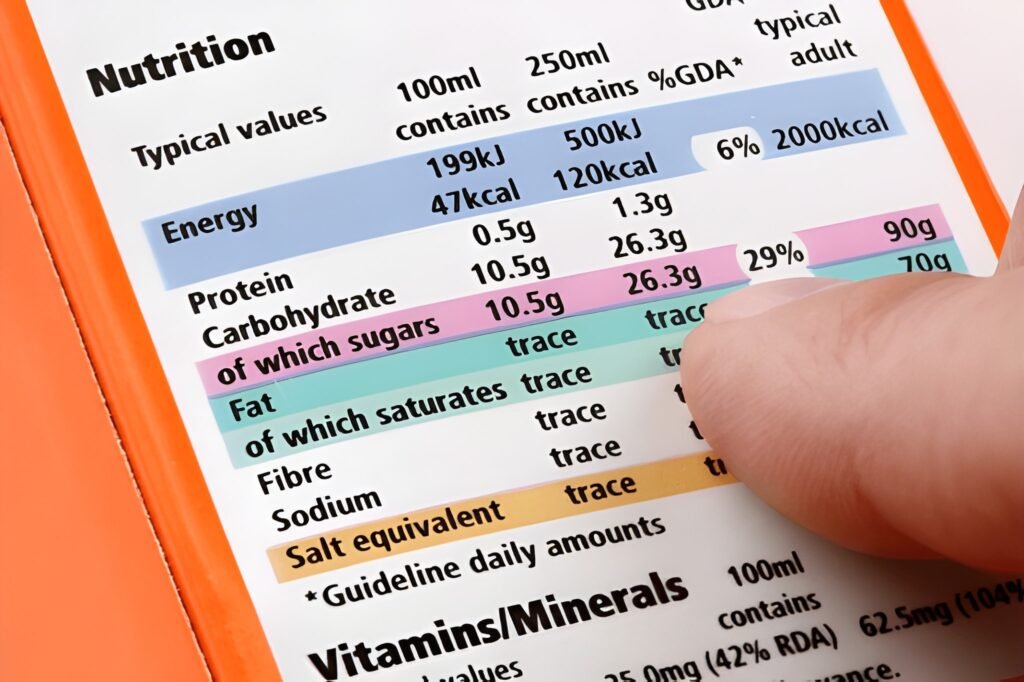
The nutrition label helps you understand a product’s caloric and nutritional value per serving. This section is especially useful for anyone tracking fitness goals, managing dietary restrictions, or planning balanced meals for the family.
What to check on the nutrition label:
- Serving size: All other values are based on this measurement.
- Calories: Helps manage energy intake and portion control.
- Macronutrients: Includes fats, carbohydrates, and proteins.
- Micronutrients: Vitamins and minerals that support overall health.
Did you know? According to Dubai Municipality regulations, food labels must be in both Arabic and English to ensure transparency and consumer understanding
Quick Checklist for Smarter Grocery Shopping
Before adding items to your Grubss cart, use this simple checklist to make sure you’re shopping smart:
- Check expiry and best-before dates
- Read ingredient lists for allergens or additives
- Look for the official Halal certification mark
- Compare nutrition facts between brands
- Choose trusted sellers on Grubss for quality assurance
Why It Matters: Building Trust with Every Purchase
Reading food labels might seem small, but it’s a big step toward making conscious shopping choices. It protects your health, aligns with your values, and ensures you get the quality you pay for. With UAE’s diverse marketplace, awareness is your best tool — and Grubss is here to make it simpler than ever.
Food labels are your roadmap to smart, safe, and halal-conscious eating in the UAE. By understanding expiry dates, ingredient lists, halal certification, and nutrition facts, you can confidently shop for your family’s needs.
At Grubss, we bring transparency and trust to your grocery shopping experience — with products that meet UAE regulations and your expectations. Start shopping smarter today and enjoy the confidence of knowing exactly what’s in your basket.